
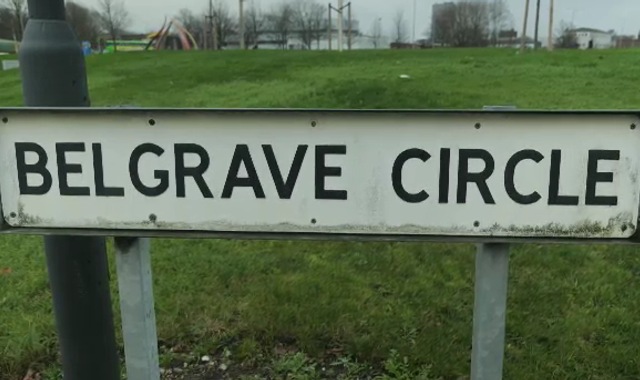
This is a story about a roundabout in Leicester.
It's not a particularly special roundabout.
But it does tell us something about British politics.
Belgrave Circle, in the north of the city, was opened in March 2015 on the site of an old railway station known locally as "The Gateway to Skegness".
Later that year, Leicester - along with the rest of the country - went to the polls in the 2015 general election.
The vote saw David Cameron win a majority and Ed Miliband resign as Labour leader.
But around the Belgrave Circle, something different was going on.
Because this is the spot where Leicester's three parliamentary constituencies meet, and in 2015 they were all held by Labour MPs who saw their majorities increase.
It's a different story now.
Stand in the middle of the roundabout and face towards Abbey Park and you'll see the city's only remaining Labour seat - that of cabinet minister Liz Kendall.
Turn around and face the B&M Home Store, and you'll find the only place the Conservatives picked up at the last election.
This freak occurrence happened after the Labour vote was split by two independent candidates - both of whom also happened to be former MPs for the city.
Labour saw its vote share cut in half here, and then some.
The Tory vote dropped as well, but not by enough to stop the party coming through the middle and taking the seat by four thousand votes.
But walk to the south of this roundabout and you'll get to where an independent candidate went one step further.
Local optician Shockat Adam won this seat last year, defeating frontbencher Jonathan Ashworth in a campaign focused mainly on Gaza and events in the Middle East.
What happened on this roundabout last July is no one-off. There's plenty of evidence to suggest these phenomena could be on the rise around the country.
Since the election, Labour's vote share has plunged, and its base has fractured as support for insurgent parties on the right and left surges.
A lot of the focus from this has been on Reform UK and how Labour can stop Nigel Farage in traditional 'red wall' seats in the midlands and the north.
And yes, Labour is leaking support to Reform on the right. But what's often not talked about is the greater number of votes its losing on the left.
A rejuvenated Green Party under Zack Polanski is chasing Labour close in some polls, while Your Party is attempting to form a separate fighting force straddling ex-Corbynites, independent pro-Gaza candidates and those from the more hard-left tradition.
Come the next election, this could all have far-reaching consequences.
Sky News has ranked all 404 Labour seats according to how at risk they are to these new forces on the left. We created this 'vulnerability index' using factors like voting history, population and demographic data.
It shows several cabinet ministers in the top 25 most vulnerable, including Home Secretary Shabana Mahmood in fourth place, Sir Keir Starmer in thirteenth place and Deputy Prime Minister David Lammy in twenty-third place.
All three of these Labour big beasts have seen their majorities cut in the last election by a Green candidate, an independent candidate or a mix of the two.
In Birmingham Ladywood, the total number of votes won by independent and green candidates exceed the number won by the Home Secretary.
That could trigger trouble, given the Greens and Your Party have indicated they may be open to the idea of local "progressive pacts".
But in the neighbouring constituency of Birmingham Hodge Hill and Solihull North, the result last year shows how an altogether different result could materialise.
Here, Labour's vote was again split by a left-wing insurgent candidate - this time from George Galloway's Workers Party.
But the conservative vote was also cut in half by Reform.
If Nigel Farage can unite the right in places like this, he could come through the middle - in much the same way the Tories did in Leicester.
So how can the government fight back?
Part of the answer, according to senior figures, is attempting to tell a more appealing story about the more overly left-wing chunks of their policy platform - such as the workers rights reforms and rental overhaul.
The hope is these stories may be given more of a hearing in 2026 when (or perhaps more accurately, if) a corner starts to be turned on big domestic priorities like the economy, the NHS and migration.
If that doesn't happen, the real saving grace for Labour could be tactical voting.
The Greens and Your Party have made it clear that they will plough on with their campaigns against the government, even if it ultimately benefits Reform.
Read more from Sky News:
Australia launches intelligence review
Engineer becomes first wheelchair user in space
What's less clear is whether left-wingers across the country will.
If they are faced with the prospect of Nigel Farage in Downing Street, could they hold their nose and stick with Labour?
It all begs the question - who is their great enemy: the government or Reform?
Ministers are already trying to emphasise a binary choice when they talk about Labour being the one single "bulwark" to Nigel Farage.
Expect more attempts to mobilise this anti-Reform vote in the years ahead.
But that's made more difficult by what happened around Leicester's Belgrave Circle. The same political fracturing that's dogged the right in years past now being replicated on the left.
Labour's ability to pick up the electoral pieces may prove decisive in whether what took place on a shabby East Midlands roundabout in July 2024 is recreated across the country in a few years' time.

(c) Sky News 2025: The Belgrave Circle effect is hitting UK politics
 Images of Trump among documents removed from latest Epstein files release
 Brent shooting: Police name 55-year-old man shot dead in Stonebridge
 Facewatch: The controversial tech that retailers have deployed to tackle shoplifting and violence
 Israel approves 19 new Jewish settlements in occupied West Bank
 'We will finish Hamas if they don't give us Rani,' says mother of last Israeli hostage in Gaza